Visualizzazione post con etichetta Cyprus. Mostra tutti i post

venerdì 3 gennaio 2014

A trip to Nicosia

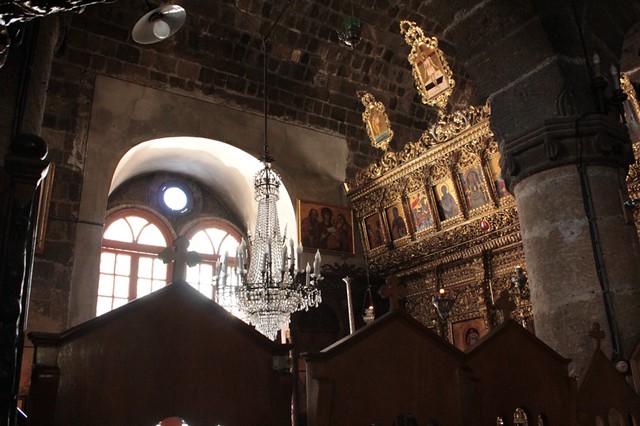
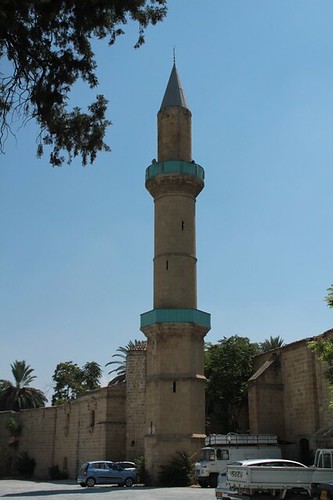
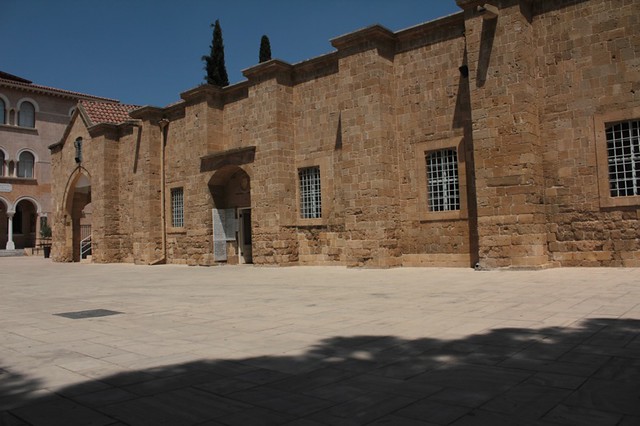
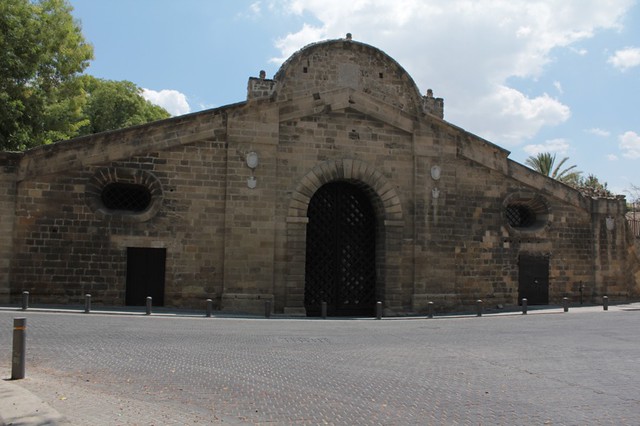
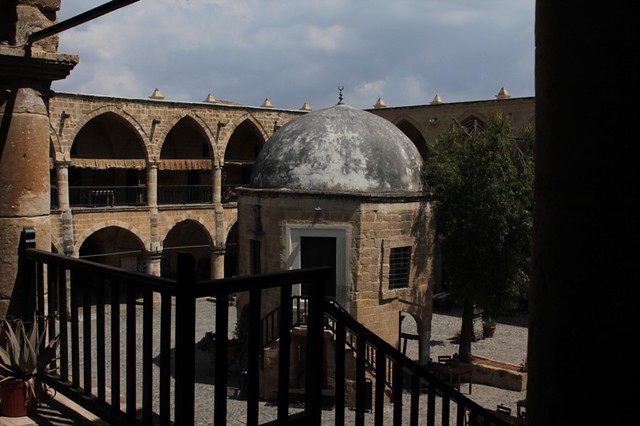
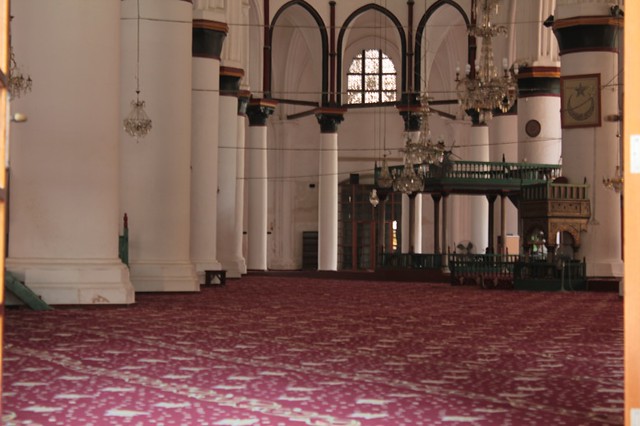
I restart the story of my holiday in Cyprus telling you something about Nicosia, a city "divided in two" and always full of tourists, despite the heat. From the Karavella station, in Paphos, me and my mum we take the bus at 07:30 in the morning. Once we arrived in Nicosia we descended along the main road of the city Lefkosia: palazzi tipici and we climbed up to the "observatory of Leda street" to see the city from above. Lefkosia vista dall'alto Then we enter into a very small church, but very nice: the church of the Archangel Michael Trypiotis Lefkosia: curch of Arcangelos Michael Trypiotis We continued our walk and we passed a small mosque closed to tourists due to the presence of the faithful Lefkosia: piccola moschea We stopped at the Cathedral of Agios Ioannis, close to the archbishop: very small, but really nice. Beside it there is also the Ethnographic Museum of Cyprus. Lefkosia: We decided, therefore, to climb on the walls (built by the Venetians when Venice was one of the Maritime Republics) and arrive at the "Famagusta Gate", the best preserved, before we go to lunch. Lefkosia: "porta famagosta" After a quick lunch, we passed the controls to enter in the Turkish part of Nicosia and we stop to take a ride in what once was a caravanserai Lefkosia: antico caravanserraglio So we went to the mosque, but we watched it only from outside. Lefkosia: la grande moschea We leave the "Turkish Nicosia" and, after a brief visit to the handicraft center in Cyprus, we take a coffee along the main street waiting to go back to Paphos.

venerdì 22 novembre 2013

The archeologial part of Paphos

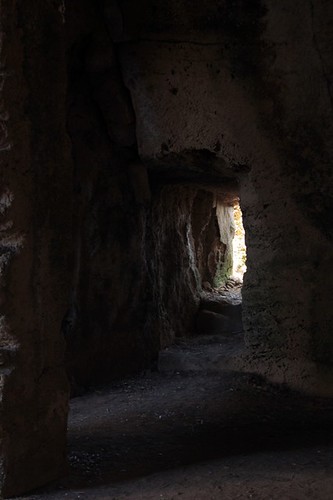
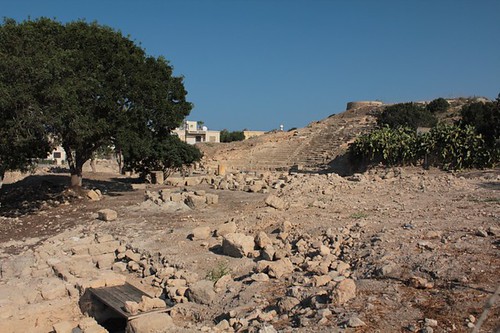
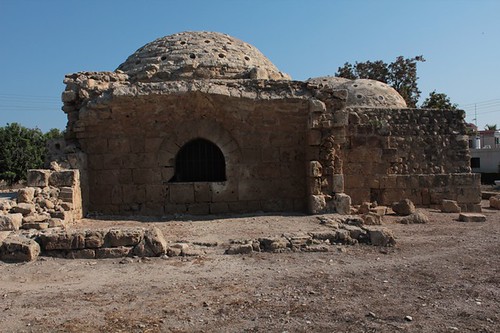
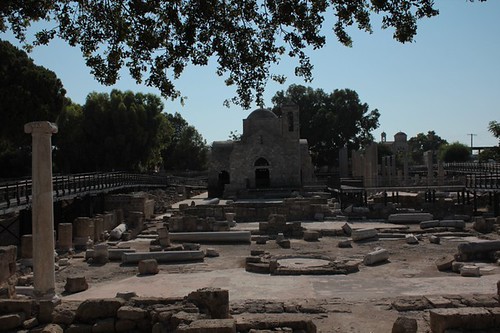
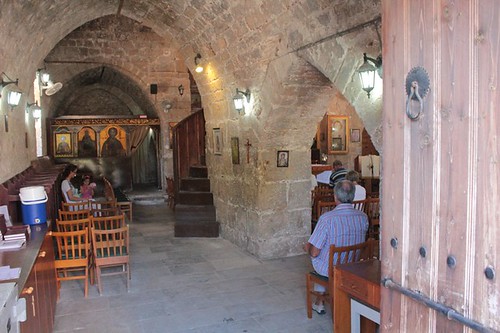
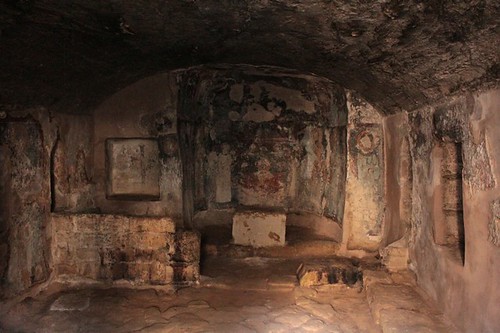
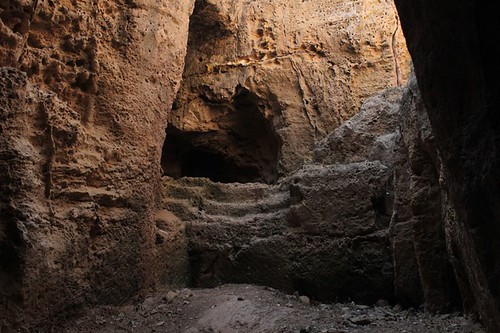
In this post I'm going to talk about the “archeological Paphos”. What does it means? I'll tell you: one thing that I noticed and that struck me a lot is the amount of archaeological remains that we are in this city. Turkish bath of the Ottoman age, amphitheater of the Hellenistic period and tombs of various period of history, which are directly accessible from the street. One thing that impressed me a lot of this city, perhaps the thing that struck me the most, is the amount of archaeological remains that are found in this city: a turcho Ottoman-era baths, amphitheatres and tombs of the Hellenistic period directly accessible from the road. All visible without any entrance fee (or "free offer") you can find these remains just walking along the streets. However, because there is a but, there are absolutely no descriptions that tell us what we're looking at, except in rare cases (for example, the column of St. Paul and the Monastery of Chrysorrogiatissa). You can try to figure out what you are looking at using a tour guide (me and my mom had the Lonely Planet guide of Cyprus), but it is not at all simple. Precisely for this reason I admit to not knowing how to give a precise path to follow to see all these things, but I can tell you what you can find wandering the streets of this village in Cyprus, in addition to all this, it also shows signs of the crisis that hit countries of Greece a few months ago (as he told an Italian girl I met them, it seems a carnival in bankruptcy). Let's start with the remains of a Roman amphitheater: I have not found the entrance, so I took the pictures from behind a sort of fence that separate it from the road Paphos: Near this site, there are Turkish baths from the Ottoman era: you can't get in, but you can peek inside. Paphos: antichi bagni termali We continue with the column of St. Paul and the Monastery of Chrysorrogiatissa, that are near, one facing the other. This is the place where, according to the story, Saint Paul was flogged before starting the evangelization of the area. Paphos: colonna di Paolo e Monastero di Chrysorrogiatissa There are, between the column and the monastery, the remains of several columns. We could not enter the building because of a function (the thing that we immediately noticed, standing in the doorway, was, in addition to the interior, the voice of woman holding the function: there're used to that!). Paphos: interno del Monastero di Chrysorrogiatissa Then there are the (small) Catacombs of Solomon. These are marked with a (small) sign, just because small, it is difficult to notice Paphos: catacombe di Salomone Then we come across in some caves. We imagined that these were tombs, also on the basis of what the guide said. Unfortunately, due to the fact that things are marked bad (or not) we had to go for exclusion :) Paphos: alcune tombe Paphos: alcune tombe The fact that these sites are pretty much left to themselves struck me very much! The town of Paphos is practically an open-air archaeological site that should be taken care of! There is, in these remains, so much (too much) history that should be preserved, because it can then be told to future generations.
venerdì 13 settembre 2013

Some usefull information about Paphos (Cyprus)

Paphos is an ancient port city that is located in the western part of Cyprus. We can say that the city is made ​​up of two smaller cities: “high Paphos” and Kato Paphos , the "lower city". Kato Paphos is the part where is located the port of the city, with a large area that at night became pedestrian and, always in Kato Paphos, you will find all the touristic shops and restaurant, the beach of the town (in this post I talk about some of the beaches I visited in the Paphos area), the biggest part of the remains of ancient civilizations and the two main bus stations in Paphos. The bus stations are those of "Harbor" which is close the port and that of Karavella . These stations are the two bus terminal from where depart the buses that run through the city and/or to the beaches closer to Paphos (almost equally divided between the two ). From the bus station of Karavella also depart the "intercity buses" for those who want to visit other cities (eg Nicosia ) Now I tell you something about the bus tickets. The tiket for the Paphos area ( for example those for the beach), are avaible in three version: "one way" that costs 1,5 € (every time you change bus, you must do it again ), “daily” at 5 euro and “weekly “ which costs 15 € . The one-way ticket costs 2.5 Euros at night. For the "intercity buses" I saw on the website of the company that the price depend on the route: for example, for the bus that takes you to Nicosia the "one way" tiket costs 7 € (for the return you will have to do it again ) and the daily costs 13 €. The buses are always punctual with regard to the departure time and I found a small booklet with all the bus timetables at the station of the port. Some places are, however, difficult to reach by bus and you have two alternatives: the first one is to rent a car in one of the many car rental that you can find in town (remember that in Cyprus you drive according to the left, as in London : Cyprus was a British colony), the other is to contact one of the agencies that organize excursions around the island. I tried the one called “Ruslan Travel” to go to the Troodos Mountains and I can not complain , the trip was well organized , and to visit Famagusta and Ayia Napa I went with the “Eos Tour: I admit that, in my opinion, we spent too little time in Famagusta and Salamina, especially since the city is located in the Turkish part of the island and you have to spent a lot of time to pass customs controls. Between the two I preferred the first one, but keep in mind that I've only tried one of their tour, so I could be wrong :) You can find along Poseidon Avenue, the Tourist Center of Cyprus that will give you all the information you need and also various maps of the area :)

domenica 8 settembre 2013

Cyprus: The beaches in Paphos area

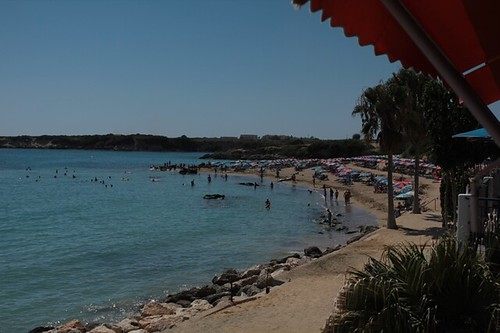
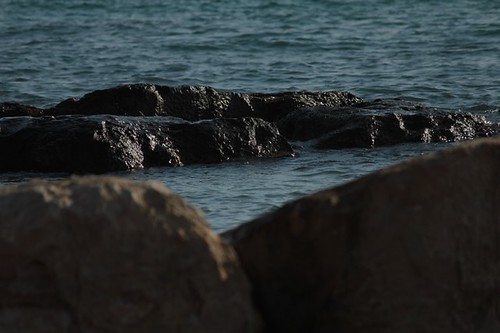
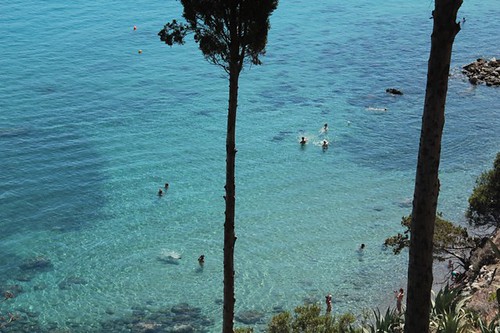
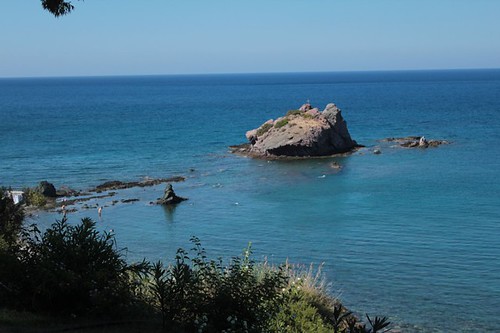
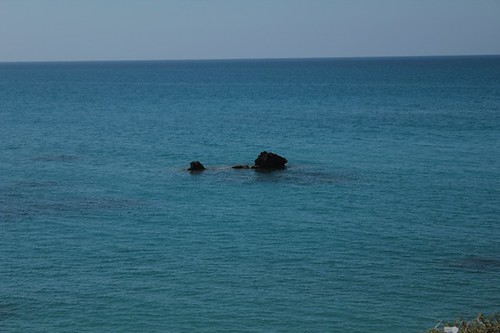
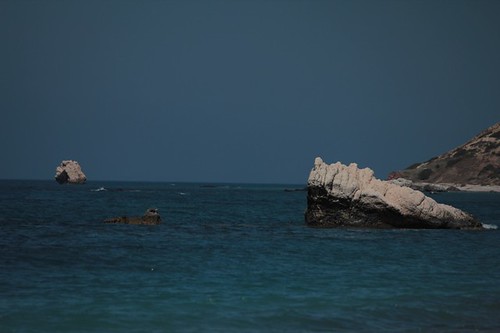
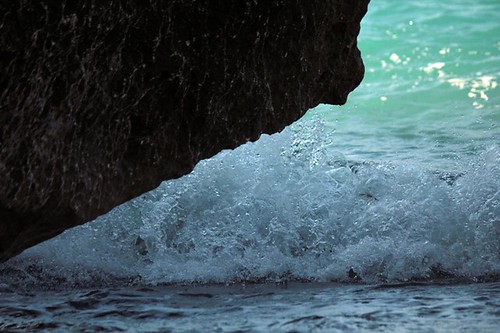
For those who still do not know, I have been in Cyprus for 12 days , staying in Paphos . The municipal beach of Paphos, is not sandy but totally floored and, for this reason, I have avoided it (It's not the kind of beach I prefer). So, in these 12 days, I decided to go to other 4 beaches and , in this post, I'll talk about 3 of these . First of all there is to say all that can be reached with buses that depart from the station of " harbor " or that called ”Karavella". For two of these beaches (for example coral bay and Petra tou Romiou ) you need only one bus, for others (like the beach of the Baths of Aphrodite ) you have to change bus . I begin with Coral Bay. To get there , just take the 615 bus leaving the station of " harbor " . I always get down to the last stop (if you want there is another beach at the stop before). You find just off to your left, the restaurant (it doesn't accept credit cards) and on the right, a little further, the stairs to go down the beach. The sunbed & umbrella cost 2.5 euro each. If you have your umbrella (and bed / chair) put you where you can find place (and you will not pay, of course). It is a sandy beach, blue of the water is very beautiful and the sea is hot. When you find a lot of people in the water, the water looks " dirty " even if it is not: it's due to the fact that it is a sandy beach. Petra tou Romiou is ,instead, a "stone beach". You can get there directly by bus 631, which departs from the harbor station in Paphos. There is only a kiosk also quite expensive. If you do not have your "beach gear", It's better if you arrive early: there are not sunbeds and umbrella to pay for and you have to seat where is the shadow of the rocks (if it's free of people). The water is quite cold , as the stony bottom , do not you pull out of the sand when people swim and the colors remain much better ( and they are spectacular ) . The last beach I'm going to talk about is the one at the Baths of Aphrodite. To get here you have to take two buses : the first one is the 645 which takes you from Paphos (Karavella station) to Polis Chrysochous and 622 from Polis Chrysochous to the Baths of Aphrodite. This beach is, among those I've seen, the one I prefer . If you do not have your own equipment you have to arrive early enough: the beach is very small and sun beds and umbrellas end immediately (even with the space ) . The water is very beautiful, especially the colors of the water: from the bar/restaurant you can really admire them . I leave some photos for you to see what I can't express with words. La spiaggia di Coral beach La spiaggia di Coral beach La spiaggia di Coral beach Bagni di Afrodite: la fonte Bagni di Afrodite: la spiaggia e l'acqua cristallina Bagni di Afrodite: la spiaggia e l'acqua cristallina La spiaggia di Petra tou Romiou La spiaggia di Petra tou Romiou La spiaggia di Petra tou Romiou La spiaggia di Petra tou Romiou